
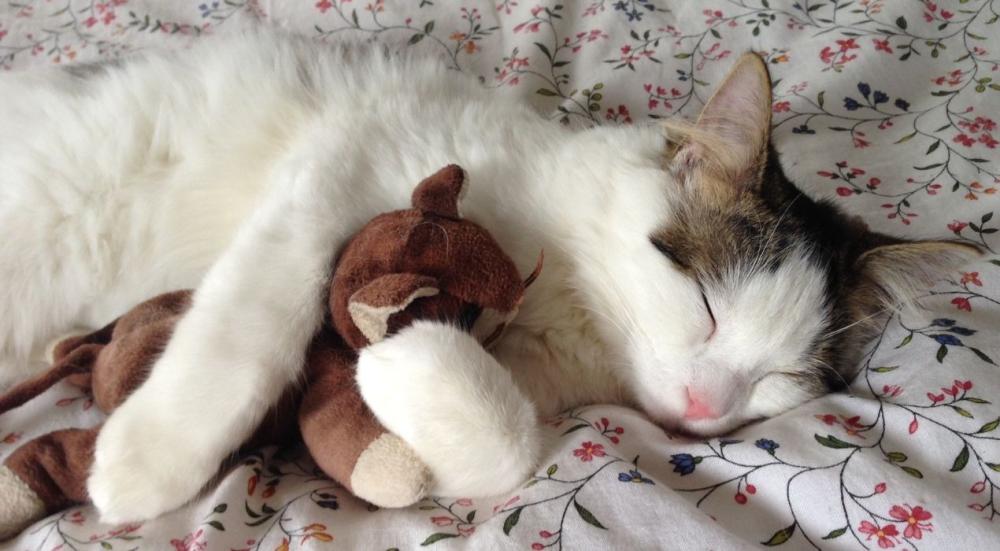

You might find your cat sleeping in every corner—on the sofa, inside a cardboard box, on your pillow, or even on top of your laptop—but have you ever wondered why cats sleep so much? And do their sleeping positions hold hidden messages? AtHamtaro, we believe that sleep is more than just rest.
Rather, it is a silent method of communication practiced by the cat to express its psychological and health condition. In this article, we will guide you to understand the world of cat sleep in all its complexities and cuteness, so that you can notice what is between the lines when the cat closes its eyes.
Why do cats sleep so much? The scientific explanation behind their long sleep.

Cats sleep an average of 12 to 16 hours a day, and this can reach 20 hours in kittens or older cats. Why?
- Biological nature: Cats are predators, and even when domesticated, their instincts remain active. Hunting requires a great deal of energy, so sleeping is part of their energy-conserving cycle.
- Evolution: Sleeping during the day protects them from dangers and gives them the best time to hunt (dawn and dusk).
- Growth and recovery: In kittens, sleep supports rapid growth. In adults, it contributes to cell repair.
- Weather: On cold or hot days, the cat prefers to sleep to conserve energy.

The benefits of sleeping with cats and its effect on the relationship with them
Many people discover thatthe benefits of sleeping with catsgo beyond physical comfort; it strengthens the emotional bond between the cat and its owner, even influencing the cat's sleep patterns when near you, or when the cat has been sleeping all day.
They carry messages of trust and affection. Some cats choose to sleep at your feet or next to you to share warmth and familiar scents.
Sleep patterns in cats: multiple stages and varying depths
- Light Sleep: The cat remains semi-awake, the ears move, and the eyes may be half-closed.
- Deep Sleep: Relatively rare, dreams occur, and the cat appears to be in a state of complete relaxation.
- REM sleep: Rapid eye movement, which may be accompanied by leg movements, tail movements, or even a faint meow.
About 75% of a cat's sleep is light, which keeps it always ready to escape or defend itself.
You may also be interested in:Treating cat wounds at home
Cat sleeping positions and their meanings: What does each position say?
Cats sleeping in the Loaf Position
When a cat sits with its paws tucked under it, without fully closing its eyes, this indicates:
- moderate comfort
- Ready for action
- A feeling of security, but not complete security.
Cats sleep on their backs with their bellies exposed.
One of the most telling signs of absolute confidence in a cat's sleep is:
- The cat is not afraid of anything
- She feels completely safe in her environment.
- But that doesn't necessarily mean she wants to be caressed!
Cats sleeping in a wool ball position
The cat curls up and buries its head under its tail:
- Feeling cold or seeking comfort
- An attempt to protect vital organs
- An indication that she doesn't want to be bothered
Cats sleeping next to you or on top of you
- An expression of deep love
- The cat feels warm and safe
- Your scent is linked to psychological comfort.
Cats sleeping on their faces or with their eyes covered
- Reaction to an annoying light or noise
- It may indicate extreme fatigue
- A type of temporary isolation
What affects your cat's sleep pattern?
- Age: Kittens and older cats sleep more
- Daily activity: The cat that plays more, sleeps more
- Food type: Protein-rich foods promote deep sleep
- Location: A safe and comfortable environment that encourages long and deep sleep.
- Weather: Cats tend to sleep more on cold or rainy days.
Reasons for cats' excessive sleep and cute behavior
The question of why cats sleep so much, or whether cats sleep a lot, is often asked. It seems thatthe reason cats sleepso much is due to their biological instinct as predators; they conserve energy for short but intense bursts of activity. The average daily sleep time for cats is known to be between 12 and 16 hours.
It can reach up to 20 hours for some, especially kittens or older cats. This explains the number of hours cats sleep, and answers the question of how many hours cats sleep or how much a cat sleeps accurately.
Cat sleeping positions and their hidden meanings
The worldof cats' sleepingpositionsand their meanings is key to understanding a cat's mood and psychological state. For example, cats sleeping on their stomachs may be reacting to sensitivity to light or noise, while cats sleeping on their backs express complete trust, security, and comfort.
Even cats sleeping next to you or on top of you isn't just about physical warmth; it's an expression of love and emotional attachment. As for kittens sleeping a lot, or the reason behind kittens sleeping so much, it's often related to their rapid growth and need for extended rest.
When is a cat's sleep considered a cause for concern?
Sleeping too much or too little can be a warning sign. Watch for the following:
- A sudden change in the number of hours of sleep
- Sleeping in unusual or secluded places
- Meowing or moaning during sleep
- Difficulty waking up
- Excessive activity only during the night
If you notice any of these signs, a visit to the veterinarian is necessary.
Read also about:Toilet training cats
Do cats dream?

Do cats dream while they sleep?
Yes, cats dream while sleeping. Studies confirm that cats go through REM (rapid eye movement) sleep, the dream stage, where they are believed to experience dreams similar to humans.
When a cat is observed twitching in its sleep, making slight movements, or meowing, it is likely dreaming. This reveals a fascinating aspect of the mystery of what cats dream about and supports the idea that cats do dream—a scientifically proven fact.
How can you provide an ideal sleeping environment for your cat?
- Choose a warm, quiet, and safe place.
- Stay away from noisy areas or busy passageways.
- Provide a comfortable bed with soft lining
- Do not wake the cat suddenly
- Respect her desire for solitude while sleeping.
Frequently asked questions about cat sleep
How many hours does a cat sleep per day?
Cats typically sleep between 12 and 16 hours a day, but some cats can sleep up to 20 hours. If you notice your cat sleeping excessively or not playing much, it could be normal or a sign of an underlying health issue.
Observation. Some breeders wonder why cats sleep so much, and the truth is that excessive sleep is a survival strategy, but it may also indicate boredom or a lack of environmental stimulation.
Is it normal for a cat to sleep all day?
Yes, as long as it is active during certain periods, and eats and drinks normally.
Why does my cat sleep in strange places?
Cats love places where they feel safe or warm, even if they seem strange to humans.
Would I disturb my cat if I woke her up?
It is preferable to let the cat sleep uninterrupted, especially during deep sleep or while dreaming.
How can I tell if my cat isn't sleeping because of a health problem?
If you notice a sudden decrease in sleep, insomnia, constant meowing, or decreased activity, consult your veterinarian.
Should cats be covered when they sleep?
A common question among cat owners is: Should cats be covered when they sleep? In reality, cats carefully choose their sleeping location based on their sense of security and comfort.
Whether it's a soft bed or even a cold floor, this sometimes explains why cats sleep on tiles. The way cats sleep and its meaning remains an indicator of their individual preferences.
AtHamtaro, we believe that a cat's sleep is a direct reflection of its physical and mental health. Don't neglect the details of its sleep; it's a mirror to its inner state. Understand its silent language when it falls asleep, and provide it with a safe environment that enhances its well-being.
Follow us regularly to learn how to get closer to your cat's world and build a relationship based on understanding, not just food. Stay connected with the Hamtaro blog for more in-depth guides and content that will strengthen your relationship with your cat from the heart.