
Nothing compares to the moment your cat looks at you with wide, eager eyes, waiting for that little treat that will make her jump for joy. Treats aren't just a way to make your cat happy; they're a silent language between you, a bridge connecting her positive behaviors with her sense of security and love. But is everything sold in stores worth feeding your little friend? And how can you tell the difference between what's healthy and beneficial and what's just commercial filler?
Let's delve together into the world of cat treats in a practical way, away from the repetitive talk, to discover how to choose the best for your cat without falling into the trap of marketing or harmful products.
Why are rewards not a luxury but a necessity?
Some might think that cattreatsare just a nice addition, but the truth is much deeper. Using treats in cat training helps build positive behaviors in a gentle and effective way. When you reward your cat after it uses the litter box correctly, or when it responds to its name, you create a mental association between the good action and the happy reward.
Cats are intelligent but selective creatures. Unlike dogs, they don't respond to commands; they need strong incentives to encourage them to repeat a behavior. This is where rewards come in as an indispensable training tool. However, not every reward is suitable, as the wrong choice can cause health problems or completely lose the cat's interest.
What makes a cat reward ideal?
When searching for the best cat trainingrewards, there are key criteria you should keep in mind.
- First, natural ingredients are key. Always look for products free of artificial preservatives, artificial colors, and added flavors. Your cat doesn't need bright food coloring; they need real protein and natural nutrients.
- Secondly, size is very important. The treats should be small enough to be given several times without causing weight gain. Cats don't need large pieces, but rather a quick, tasty signal that they've done a great job.
- Third, nutritional value. Healthy treats for cats should be high in animal protein and low in carbohydrates and sugars. Cats are primarily carnivores, so the best treats should be based on meat or fish as the main ingredient.

Types of cat treats: Which is best for your cat?
Dry treats (Crunchy Treats)
This type is the most common and usually comes in small, crunchy pieces. Its main advantage is that it's easy to store and doesn't require refrigeration, and it also helps to gently clean your cat's teeth. But beware of products loaded with grains and starches, as these may simply be cheap fillers.
Soft Treats
They come in the form of a paste or soft pieces, making them a favorite with cats suffering from dental problems or older cats. They are also ideal for concealing medications when needed. However, they typically have a high moisture content, so they don't remain usable for long after the package is opened.
Freeze-dried treats
These are natural, additive-free delicacies, where fresh meat or fish is dried in a way that preserves its nutritional value. They are considered among the healthiest options because they typically consist of only one ingredient, such as chicken or salmon, without any added ingredients.
How do you read the ingredients in a rewards pack?
Don't be fooled by the pretty pictures on the packaging. Turn the product over and read the ingredients list carefully: the first ingredient should be a clear animal protein: chicken, salmon, beef, and not vague "meat by-products" or "animal meal".
Avoid products containing "animal by-products," "offal," or large amounts of corn and wheat. These are cheap ingredients used as fillers to reduce costs, but they offer no real nutritional value to your cat.
Look for products that clearly state "Grain-Free" if your cat has allergies, or "100% Natural" for the best possible quality.
Order your Salmon Flavored Prawn Rewards 50g now
Kitten Rewards: Special Needs
Kittens have different nutritional needs than adult cats. During their growth phase, they require higher amounts of protein, calcium, and calories. Therefore, when choosing treats for kittens, ensure they are specifically formulated for this age group.
The treats should be very small and soft, easy to chew, as kittens' teeth are still developing. Avoid treats that are too hard or large, as these may cause swallowing difficulties.
Hamtaro offers a variety of products specifically designed for cats at different ages, ensuring your kitten gets exactly what it needs without harmful ingredients.
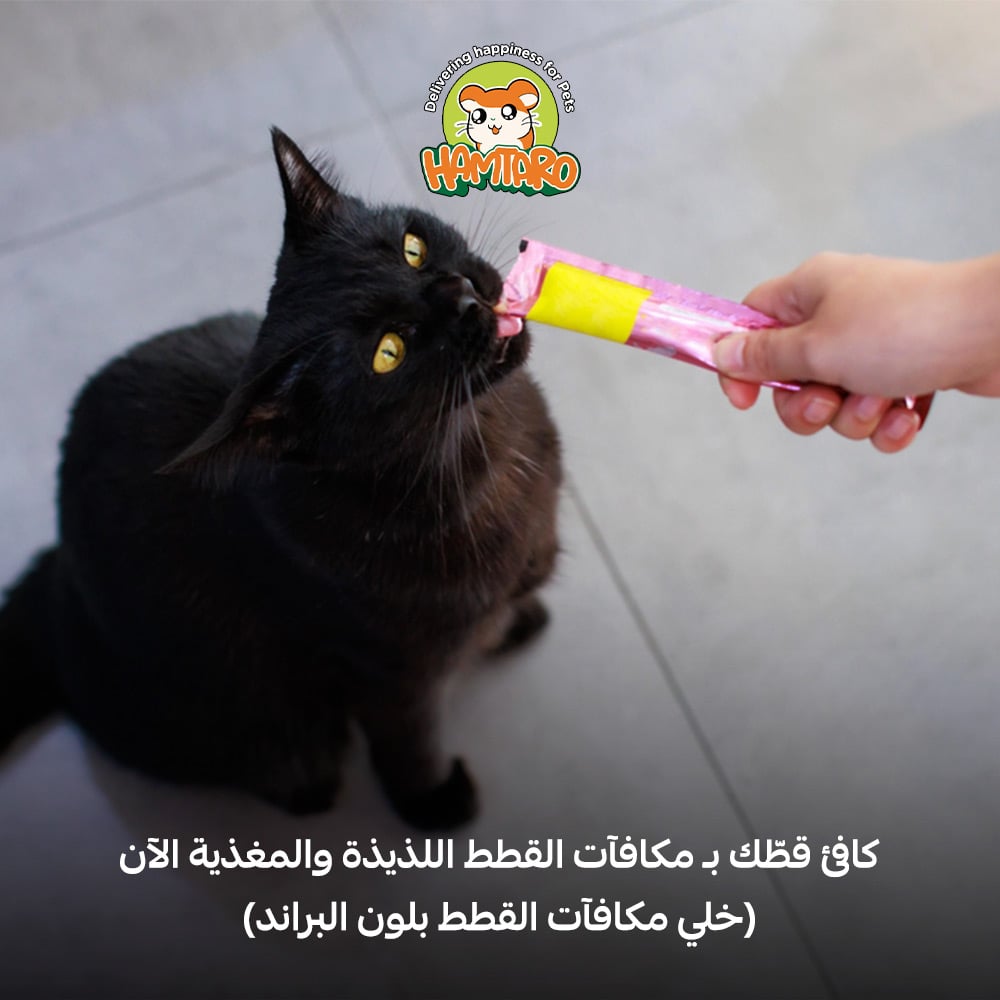
How to give treats to cats: timing and quantity
Knowing how to reward cats is just as important as choosing the right type of reward. The golden rule: the reward should come immediately after the desired behavior, within seconds. Cats don't connect events if a long time has passed, so the quicker the reward, the more effective the training.
As for quantity, treats should not exceed 10% of your cat's daily calorie intake. This means only about 2-4 small treats per day, depending on your cat's size and weight. Excessive treats can lead to obesity and serious health problems.
Use treats only during training sessions, not as random extra food. This maintains their high value in your cat's eyes and makes them more effective as a training tool.
Hamtaro products: Reliable options worth trying
When searching for Hamtaro cat treats, you will find a wide range to suit different needs, from savings packs that provide excellent value for breeders who prefer to buy in larger quantities, toRon Ron productsthat feature high-quality natural ingredients, all the way to the Caneva range that offers a variety of healthy treat options.
What sets these products apart is their commitment to quality standards and transparency regarding ingredients. When you choose Hamtaro, you're choosing products that have been tested and trusted by breeders, with the assurance that every treat you give your cat contributes to its health and happiness.
Toffee boxesare ideal for families with more than one cat, offering economical options without sacrificing quality. Meanwhile, Ron Ron products are perfect for those seeking luxurious treats with rich, natural flavors. And Caneva offers a variety to suit different cat preferences, whether they prefer seafood or meaty flavors.
Order M Pets Tuna Cat Treats 4 x 15g
When are human rewards safe?
Many pet owners wonder: Can cats be given human treats like chicken or tuna? The answer is yes, but with some conditions. Plain boiled chicken (without salt or spices) and fresh tuna (not canned in oil or salt) can be excellent healthy treats.
But beware of dangerous human foods: onions, garlic, chocolate, grapes, raisins, and dairy products in large quantities are all toxic to cats. Also, raw meat may carry harmful bacteria, so it's best to cook it thoroughly before serving.
The problem with human food is that it's not nutritionally balanced for cats and doesn't contain taurine and other essential nutrients they need. Therefore, human food should remain an occasional treat only, not a replacement for treats specifically designed for cats.

Signs that the reward is inappropriate
Observe your cat after offering any new treat. If you notice vomiting, diarrhea, itchy skin, or loss of appetite, these are signs of a possible allergy or digestive problem. Stop offering the treat immediately and consult your veterinarian.
Also, if your cat absolutely refuses the treat, don't force it. Cats are picky eaters and may not like a particular flavor, even if it's healthy. Try different flavors until you find one that suits her taste.
Some cats become addicted to treats if given too often, and may refuse their regular food. If you notice this behavior, gradually reduce the number of treats and maintain a regular feeding schedule.
Building a healthy relationship through rewards
Cat treats aren't just a training tool; they're a way to strengthen your bond with your feline friend. When you offer a treat with love and care, your cat feels secure and appreciated. This builds a deep trust between you that goes beyond just a food relationship.
Use reward time as a bonding moment: speak to your cat in a calm voice, gently stroke its head, and let it feel that this moment is special. Over time, your cat will associate you with positive emotions, making training easier and your life together happier.
Frequently Asked Questions
What are the best cat rewards for daily training?
The best options are small, protein-rich, low-calorie treats that are easy to digest. Freeze-dried treats or small pieces of cooked chicken are ideal for everyday use. The important thing is that the flavor is appealing to your cat and that it retains its effectiveness as a reward.
How often can cats be given treats without harm?
Treats can be given a maximum of 2-4 times per day, provided they do not exceed 10% of the total daily calorie intake. For an average-sized cat, this translates to approximately 20-30 calories from treats alone. These are best used in short training sessions spread throughout the day.
Do cat rewards help strengthen the relationship with the owner?
Absolutely. Rewards create a positive bond between you and your cat, especially when combined with social interaction like petting or playing. This builds mutual trust and makes your cat more responsive. But rewards alone aren't enough; they must be accompanied by comprehensive care and genuine love.
What is the difference between dry and wet treats for cats?
Dry treats are firmer, offer some teeth cleaning, and are easier to store. Wet treats are softer, suitable for cats with sensitive teeth, and often more appealing in terms of scent. Wet treats contain more water and help with hydration, but they spoil more quickly after opening.
Can human treats like chicken or tuna be given to cats?
Yes, but under strict conditions. The chicken must be thoroughly boiled without salt, spices, or bones. Fresh tuna is preferable to canned, and if canned, it must be packed in water, not oil, and in very small quantities, as excessive consumption can cause health problems. These should only be occasional treats.